How Often Should a School Screen? OFAC Already Answered, and It Isn't Once
OFAC's FAQ 65 tells insurers to screen at policy issuance and to consider screening again at later policy events and whenever the sanctions lists change. If your school's compliance file is a one-time screen from admissions season, the agency's own words explain the problem: the lists are updated frequently, and a party who was clean in September can be designated in February.
There is a version of sanctions compliance that feels finished. The school runs every family through a screening service during admissions, collects a clean report, drops the PDF in the file, and moves on. Ask when the roster was last screened and the answer is a date: one date, from months ago. The screen happened. The box is checked.
The problem is that a sanctions screen is not a certificate. It is a snapshot of one moment in a list that never stops moving. And you do not have to take our word for that: the Office of Foreign Assets Control has said it, in writing, in its own compliance guidance.
The short answer
How often should a school screen for OFAC sanctions? Screen every party at intake, re-screen at each re-enrollment, screen new payors, guarantors, and sponsors the day they are added, screen before money moves, and re-screen the entire active roster whenever OFAC updates its sanctions lists. A one-time screen at admission documents a single day; OFAC's FAQ 65 guidance treats screening as an ongoing cadence tied to events and list updates, not a box checked once.
What OFAC actually said
OFAC's FAQ 65, updated November 13, 2024, is written for the insurance industry. It says insurers should screen all relevant policyholders, beneficiaries, and counterparties at policy issuance, and then keeps going. Insurers, per OFAC, should also consider screening at:
- policy renewal,
- policy amendment, including when insured parties or beneficiaries are added,
- claim submission and claim payment,
- updates by OFAC to its sanctions or sanctions lists, and
- any other time the insurer may be exposed to sanctions risk.
The FAQ closes with the reasoning, and it is the part worth reading twice: OFAC's sanctions programs and lists are updated frequently, and screening only at issuance "may expose insurers to sanctions risk, for example, providing financial benefit to subsequently blocked persons."
Let's be precise about what this is and is not. FAQ 65 is guidance, not regulation, and it is addressed to insurers, not schools. Nothing in it creates a screening rule for education. But the obligation it supports (do not transact with blocked persons) comes from the sanctions regulations in 31 CFR Chapter V, and those bind every US person: banks, insurers, nonprofits, and schools alike, on a strict-liability basis. FAQ 65 is simply the clearest public statement of how the agency thinks screening should actually work in a recurring financial relationship: screen at the events, and screen again when the lists change.
A school year is a recurring financial relationship. The mapping is almost embarrassingly direct.
Strict liability doesn't grade on intent
Sanctions violations are strict-liability: accepting tuition from a blocked person is a violation whether or not anyone at the school knew. "We screened them at admission" is a fact about the past, not a defense about the payment that cleared last week. What protects an institution is a documented, current screening record, and a cadence that matches how the lists actually behave.
Why a one-time screen decays
OFAC publishes its list changes on the Recent Actions page, and the rhythm is relentless: additions, removals, and program changes land month after month, often several times in a single month. Every one of those updates silently re-opens every screen you have ever run. The family that cleared in September was screened against September's list. October's designations were not part of that check. Neither were December's, or February's.
This is the specific gap in the "we used a third-party service at admission" model. The screen itself may have been perfectly good; that is not the issue. The issue is that it answered a question about a single day, and tuition is not a single-day relationship. Payments arrive monthly. Payors change mid-year. A guarantor signs in January. A new sponsor appears for the spring term. Each of those is a fresh transaction screened, in effect, against nothing, unless something is watching the list.
And the decay runs both directions. Lists shrink as well as grow, and a delisting matters too: a family flagged against an old list version may be perfectly fine today, and a stale screen keeps that false positive alive. A current screening record is how you stop both over-blocking and under-catching.
Point-in-time service vs. monitored roster
The distinction that matters when comparing screening approaches is not which vendor ran the check; it is whether anything happens after the check.
One-time screen
- ✕Valid for the day it ran; silent about every list update since
- ✕New payors, guarantors, and sponsors join mid-year unscreened
- ✕Re-running means someone remembering to re-run: staff time, annually at best
- ✕A mid-year designation surfaces at the next audit, or in the news
Monitored roster (SecurePoint Education)
- Screens students, payors, sponsors, and donors at intake, then re-screens on a schedule
- Re-screens the active roster every 30 or 90 days
- A new match at re-screen becomes a reviewable case with a human decision
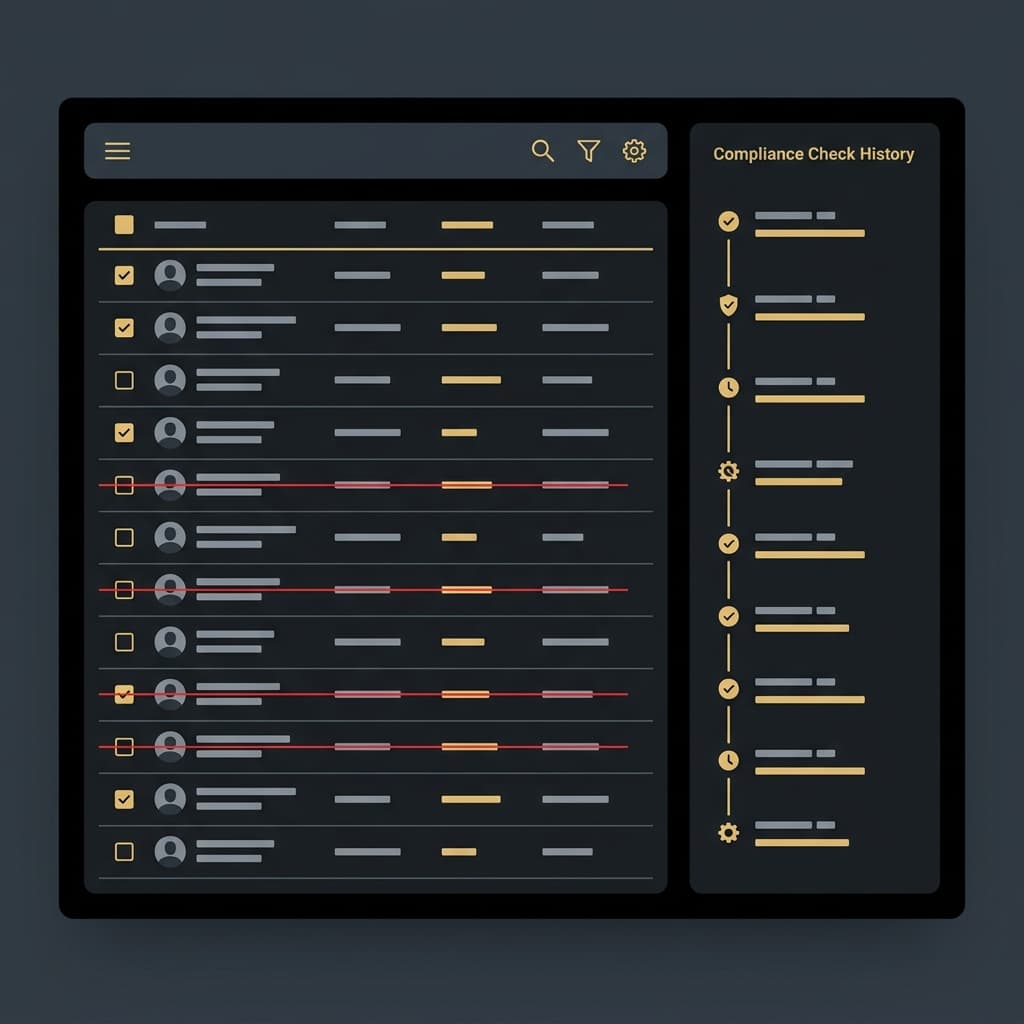
- Every screen logged with list version, date, result, and reviewer; evidence packs on demand
That right-hand column is the FAQ 65 idea translated into software: screen at the events, re-screen on a schedule, and keep the record. It is the same logic behind our continuous monitoring for schools, and it mirrors what OFAC has suggested insurers consider for years.
What a defensible cadence looks like for a school
- Screen every party at intake: student, family, tuition payor, guarantor, sponsor, agent, and major donors.
- Re-screen the full active roster when OFAC updates its lists, not on an annual calendar that ignores them.
- Screen the actual payor before money moves; the person who pays is often not the person who applied.
- Route every potential match to a documented human decision: no silent passes, no quiet clears.
- Record the list version, date, result, and reviewer for every screen, so the file proves the cadence.
- Treat delistings as real too: removals resolve false positives and unfreeze legitimate relationships.
If a screen does surface a real match mid-year, the follow-up has its own discipline: our guide to OFAC licensing when a student gets flagged walks through general licenses, specific licenses, and when to bring in counsel. And if your school is still deciding whether tuition screening applies to you at all, start with the $1.72M education-sector wake-up call.
Screening frequency for schools: FAQ
Primary sources
- OFAC FAQ 65: screening frequency guidance for insurers (updated Nov 13, 2024)
- OFAC Recent Actions: the running log of list updates
- OFAC FAQ index (insurance topic)
- 31 CFR Chapter V: the sanctions regulations themselves (eCFR)
OFAC guidance and list status change frequently; verify the current text against the agency before relying on it. This article is educational and is not legal advice.
Make "when did we last screen?" a good answer
SecurePoint Education screens your students, payors, sponsors, and donors, re-screens them on a schedule, and puts a human decision and a timestamped record behind every match.