When Sanctions Lists Shrink: Why Delistings Matter as Much as New Designations
Treasury’s latest SDN removals show why sanctions screening needs list hygiene, re-screening, false-positive controls, and audit-ready evidence, not just one-time checks.
Most compliance teams watch for new names added to sanctions lists. Fewer teams ask what happens when names come off. Yet, managing the removal of restricted parties is just as critical to operational maturity and evidence integrity as tracking new designations.
Treasury’s latest Specially Designated Nationals (SDN) removals are a clear reminder that sanctions screening is not a static, yes-or-no database lookup. Lists change constantly. Entities age out. Vessels stop operating. Companies dissolve. People die. Despite these changes, your compliance records must continue to prove exactly what was verified at the time of each operational decision.
Key Operational Insight
Compliance is a history of decisions, not a momentary snapshot. When lists shrink, companies that fail to update their reference files waste thousands of hours resolving obsolete false positives, while those lacking historical version logs find themselves unable to reconstruct past clearances for regulators.
What Happened: The May 28 SDN List Update
According to Reuters , the U.S. Department of the Treasury recently executed a significant administrative update to its SDN list on May 28, 2026. The update removed 76 names and entities.
The removals represent a concerted effort by the Office of Foreign Assets Control (OFAC) to clean up obsolete targets. Reuters reported that Treasury had heard from businesses spending substantial resources screening low-risk or defunct entries. This update is designed to help compliance officers reallocate time toward high-risk targets and active sanctions evasion tactics.
| Removal Type | Count | Compliance Challenge Addressed |
|---|---|---|
| Deceased Individuals | 39 | Eliminates legacy name-match false positives |
| Defunct Companies | 13 | Lifts restrictions on dissolved entities |
| Inactive Vessels | 14 | Cleans up obsolete maritime screening flags |
| Other Entities | 10 | Simplifies multi-list ownership maps |
This clean-up comes after a historic period of growth in global sanctions. Reuters notes that annual new sanctions listings jumped from 880 in 2017 to more than 3,000 in 2024. As sanctions lists ballooned, the noise in screening software grew with it.
Why Sanctions Delistings Matter to Compliance Operations
When a name is removed from the SDN list, the effects ripple through multiple areas of your compliance program:
- Resolution of False Positives: Outdated names generate false positives sanctions screening teams must manually review. Removing them reduces operational noise.
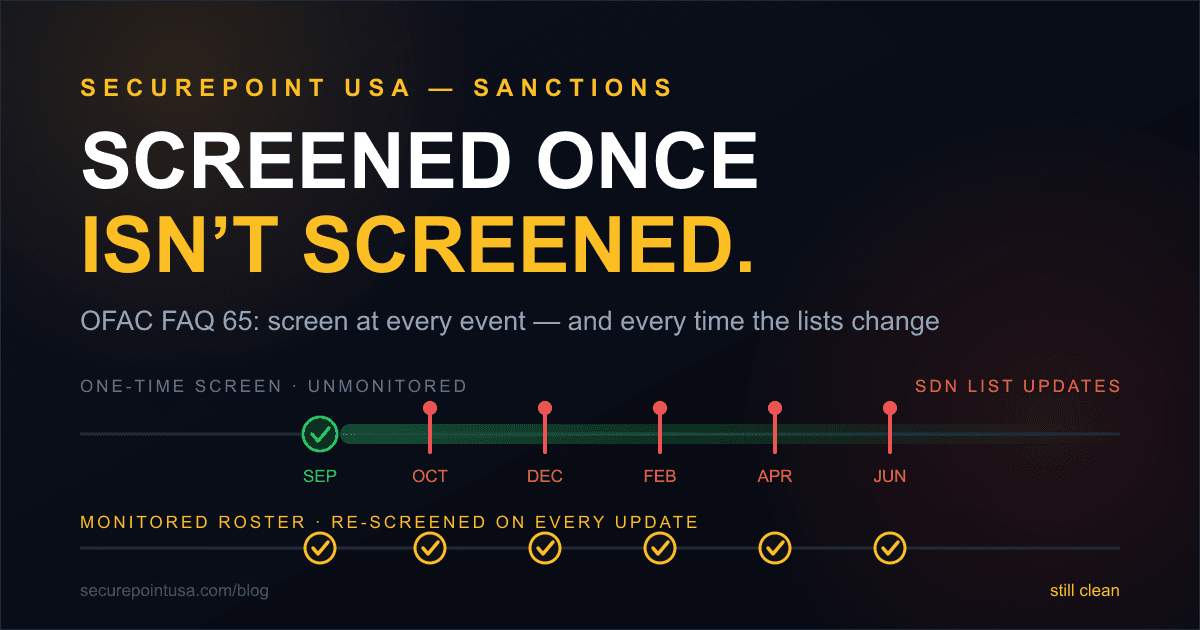
- Re-screening and Change Control: A visitor, payor, vendor, or counterparty who matched yesterday may suddenly be cleared today. If your data isn’t updated, you risk blocking legitimate activity.
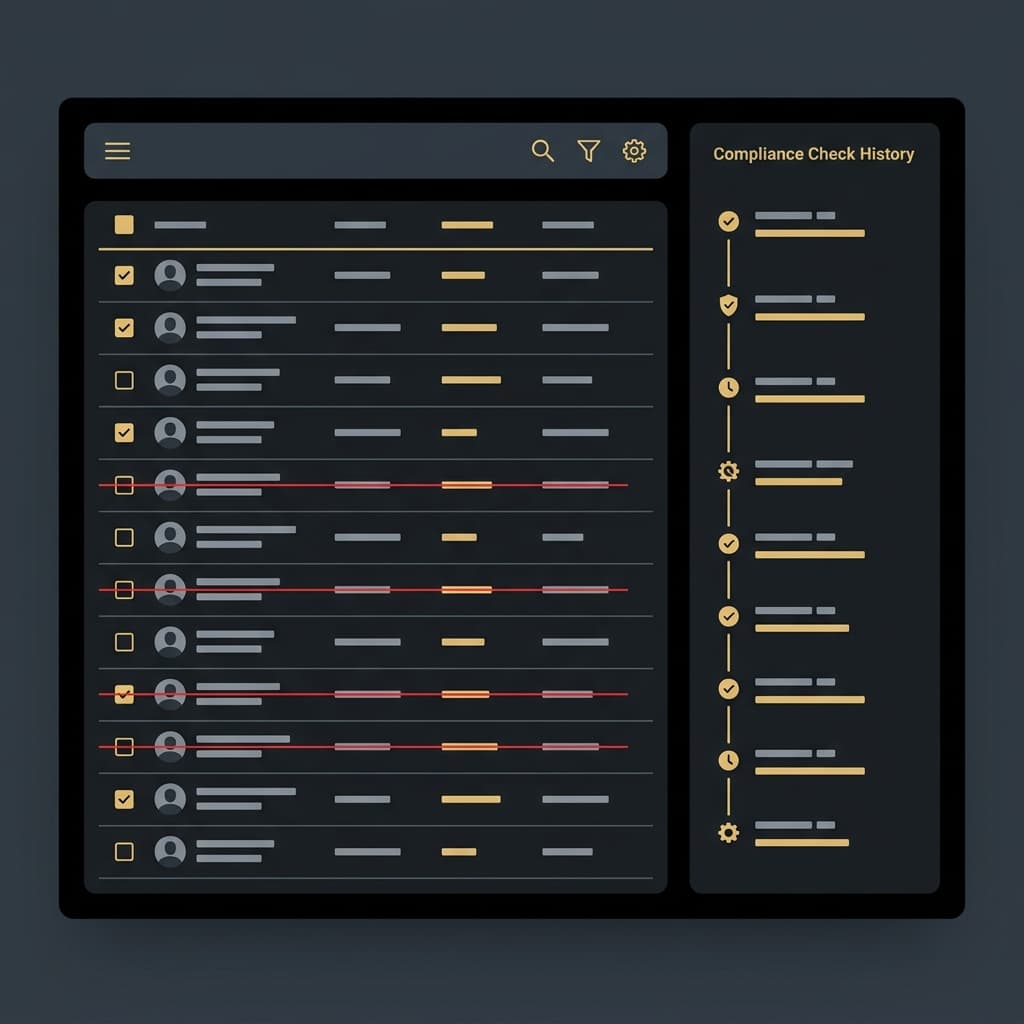
- List Version Integrity: A defensible file shows which list version was active when a check occurred. If a regulator asks why you cleared an entity in 2025 that was only delisted in 2026, you need historical records to back up your timeline.
The Operational Problem: Where One-Time Checks Fail
A screening result that holds up in review answers more than “Is this person clean today?” A useful file can show:
What specific list version and list update date were referenced during the check?
What search thresholds and matching algorithms triggered the result?
Who evaluated the flag, what rationale did they write, and when did they click approve?
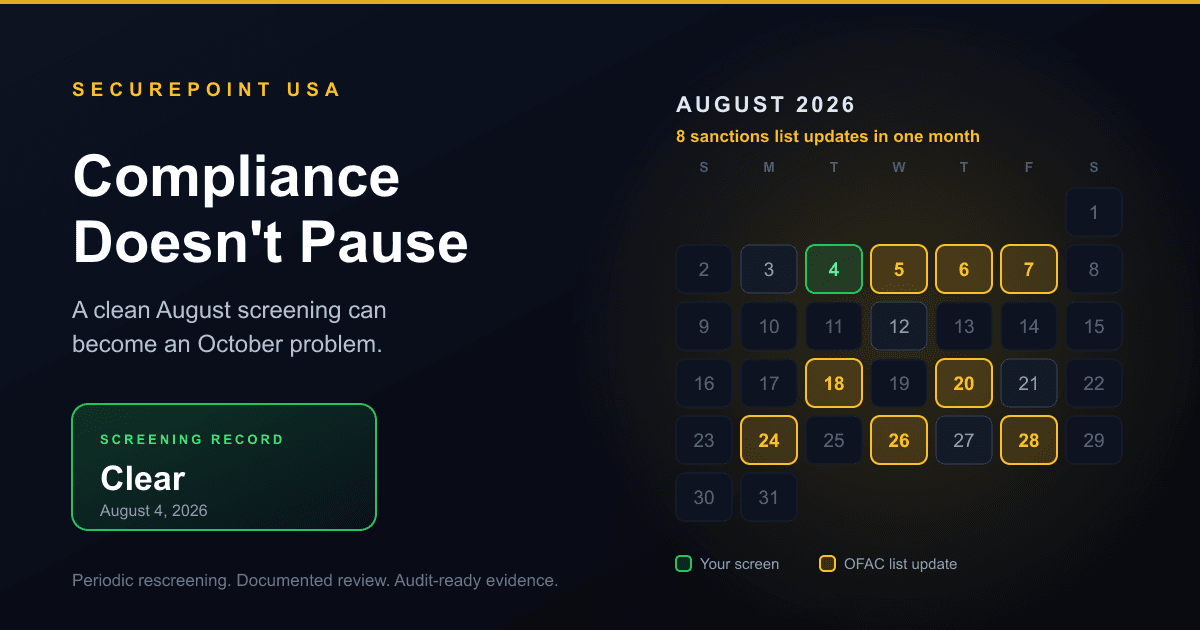
Was the person re-screened on a later scheduled run, and is that run in the record?
This is why compliance programs managed in spreadsheets and flat files break down. A spreadsheet may log a one-time check, but it does not keep list versions, reviewer notes, or an append-only history of later scheduled re-screens.
How Sanctions List Hygiene Affects SecurePoint Products
List updates are managed platform-wide at SecurePoint USA, supporting workflows tailored to specific operational needs:
SecurePoint Visitor
When visitors check in at physical kiosks, they are screened against the current active SDN registry. If a previously flagged contractor is cleared by an OFAC delisting, the system updates its flags. The SecurePoint Visitor Management platform retains the historical evidence showing what was true at the time of entry, so you can show which list applied when each visitor checked in.
SecurePoint Education
Independent schools and universities screening tuition payors, donors, and vendors have to balance sanctions screening with enrollment cycles. Scheduled list refreshes and recorded dispositions help a business office see when a prior hold no longer applies.
SecurePoint Trade
Exporters and trade compliance managers need to continuously track counterparties, affiliates, and maritime carriers. Our multi-list screening tracks status changes across global regulatory updates, compiling them into historical evidence packs that prove due diligence was maintained throughout the relationship lifecycle.
Want to see how SecurePoint handles list changes dynamically?
Schedule a walkthrough of our compliance screening workflows.
Five Questions to Ask After a Sanctions List Update
Geopolitical updates happen without warning. To test the resilience of your current sanctions screening software, ask your team these five questions:
Audit History
Do we know exactly which historical records were screened against the previous version of the list?
Change Identification
Can we easily pinpoint which matches or flags changed because of the latest update?
Re-screening Cadence
Do we re-screen active visitors, payors, vendors, and counterparties on a schedule, and is that run in the record?
Reviewer Documentation
Can compliance managers document the precise reasoning for clearing, holding, or escalating matches?
Evidence Portability
Can we export complete screening evidence files without needing to reconstruct the timeline manually from spreadsheets?
A Defensible Compliance Workflow
SecurePoint USA is designed to help teams manage screening as an operational workflow, not a one-time lookup. Our tools support human-reviewed decisions, audit-ready records, screening history, and evidence that helps explain what changed and when.
Rather than trying to automate human judgment away, we equip compliance teams with the list hygiene, versioning, and logs needed to confidently answer when, why, and how a security decision was made.
Frequently Asked Questions
Why do sanctions delistings matter?
Delistings can change screening results, reduce false positives, and require teams to explain why a person or entity was flagged before but no longer appears on a sanctions list.
Should companies re-screen after sanctions list updates?
Many compliance programs benefit from re-screening active parties after major list updates, especially vendors, payors, donors, visitors, and counterparties with ongoing relationships.
What is sanctions list hygiene?
Sanctions list hygiene means keeping screening data current, tracking list updates, preserving evidence of past checks, and documenting how match decisions change over time.
Can software replace human sanctions review?
No. Software can support screening, evidence, and workflow consistency, but compliance teams should keep human review and documented decision-making.
Visitor Compliance Checklist
- ITAR/EAR and CMMC L2 requirements
- Audit-ready evidence collection
- Possible matches go to a reviewer
Or get it sent to your inbox