The $275M Lesson: Why Adani Enterprises' OFAC Settlement Should Terrify Supply Chain Leaders
In global trade, "we didn't know" is not a defense. OFAC's massive settlement over Iranian LPG shipments proves why static screening of tier-one vendors is a critical vulnerability.
On May 18, 2026, the U.S. Treasury's Office of Foreign Assets Control (OFAC) announced a staggering $275 million settlement with Adani Enterprises Limited (AEL). The charge? 32 apparent violations of U.S. sanctions against Iran.
The fine itself is massive, but the mechanics of the violation are what should keep Chief Compliance Officers and Supply Chain Leaders awake at night. AEL didn't intentionally seek out Iranian suppliers. They purchased shipments of liquefied petroleum gas (LPG) from a Dubai-based trader.
The problem? The LPG was actually sourced from Iran, and according to OFAC, AEL ignored multiple "red flags" regarding the true origin of the cargo. The enforcement action explicitly cited that the company "lacked sufficient compliance measures" to address sanctions-related risks in these transactions.
The Illusion of the "Clean" Vendor
When AEL engaged the Dubai-based trader, that trader was not on any sanctions list. Under a legacy "checkbox" compliance program, this is where the screening stops. But OFAC's Economic Fury campaign and recent actions prove that screening your direct counterparty is no longer enough. Evasion networks use front companies, falsified certificates of origin, and obscure shipping routes specifically to defeat static screening tools.
Why Static Screening is Security Theater
For years, organizations have relied on batch-uploading vendor names into a database once a year, or performing a quick check during onboarding. In 2026, this is the equivalent of a physical security guard checking a printed list from yesterday while ignoring a visitor wearing a ski mask today.
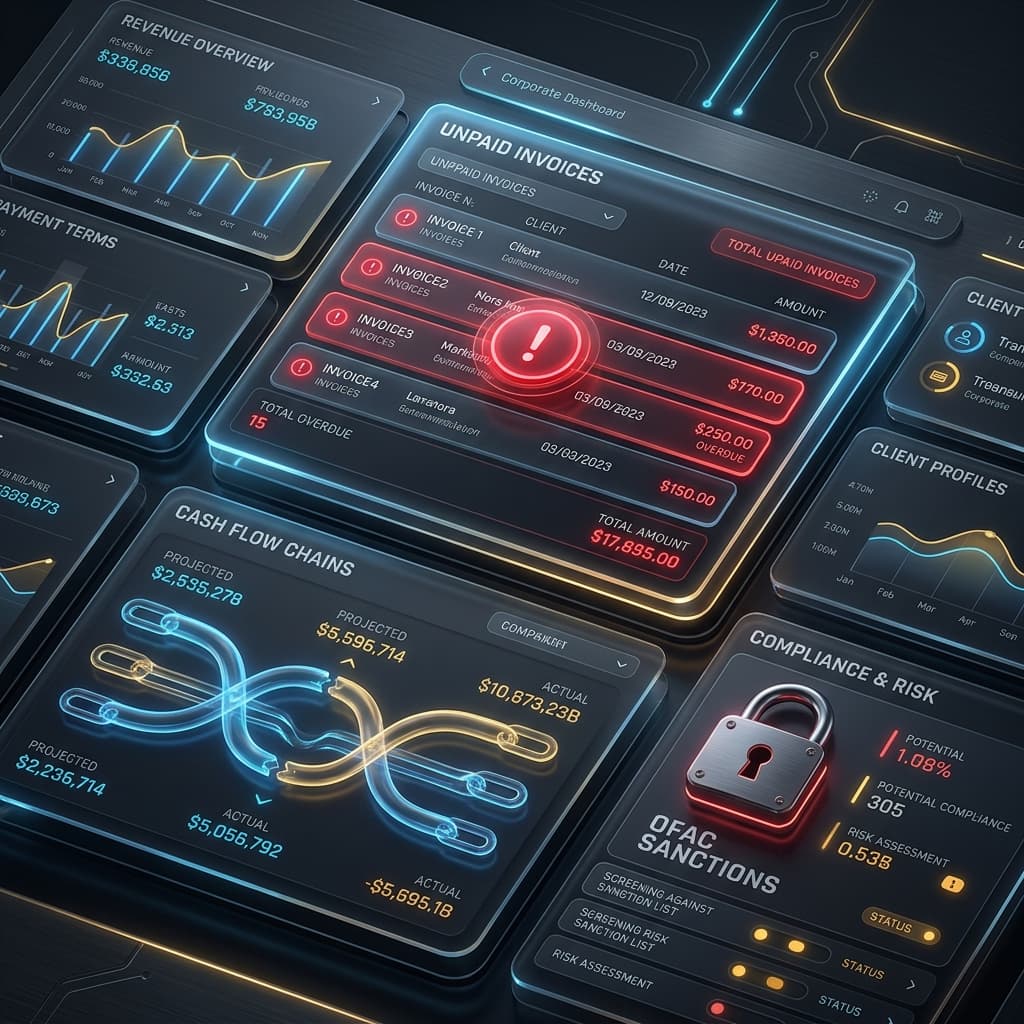
The Adani settlement is a reminder that sanctions risk can sit with your supplier's supplier. The exposure is not limited to the entity you cut a check to. It can sit in the vessels they use, the owners behind their corporate structure (the 50 Percent Rule), and the true origin of the goods.
If your compliance program relies on manual reviews of PDFs and static watchlists, you are effectively operating blind. Red flags (like unusual shipping routes, pricing anomalies, or sudden changes in corporate structure) are invisible to static systems until it is too late.
Continuous Visibility: A More Defensible Strategy
To survive in the current regulatory environment, your screening must be continuous, dynamic, and deeply integrated into your operational workflows. Whether it is a visitor entering a defense manufacturing floor or a massive shipment of LPG arriving at a port, the principles are the same:
Deep Visibility
You must screen beyond the direct counterparty. This means resolving beneficial ownership and tracking the entire supply chain footprint.
Continuous Screening
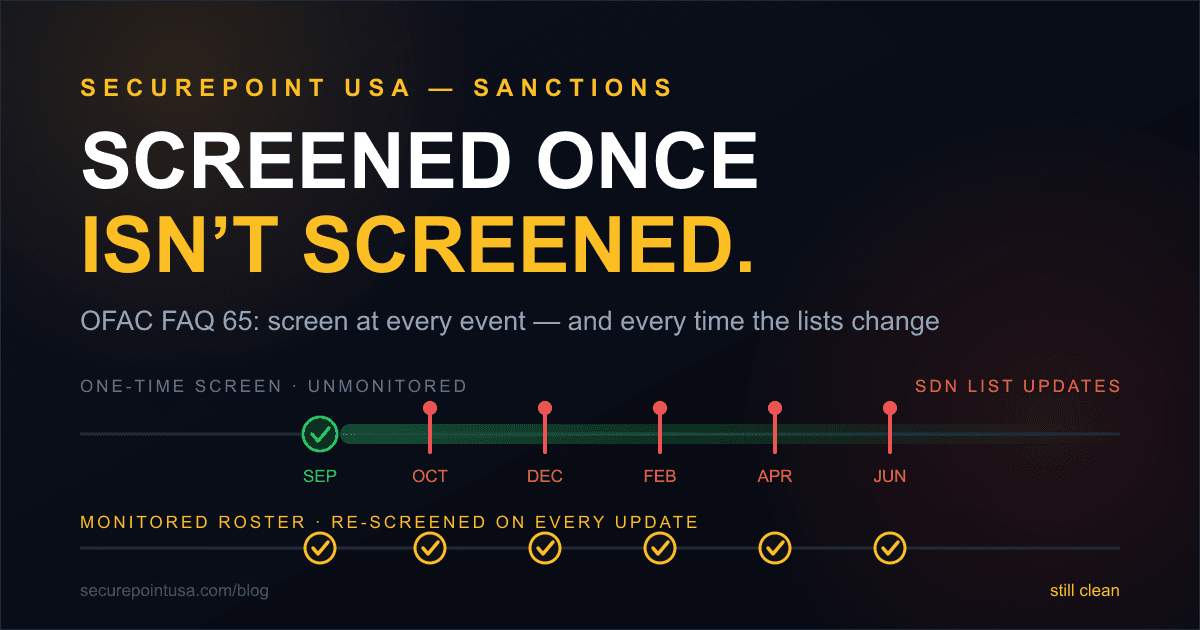
Sanctions lists change daily. A vendor that was clean on Tuesday might be designated on Thursday. Your systems should flag it at the next re-screen, not at the annual review.
Immutable Audit Trails
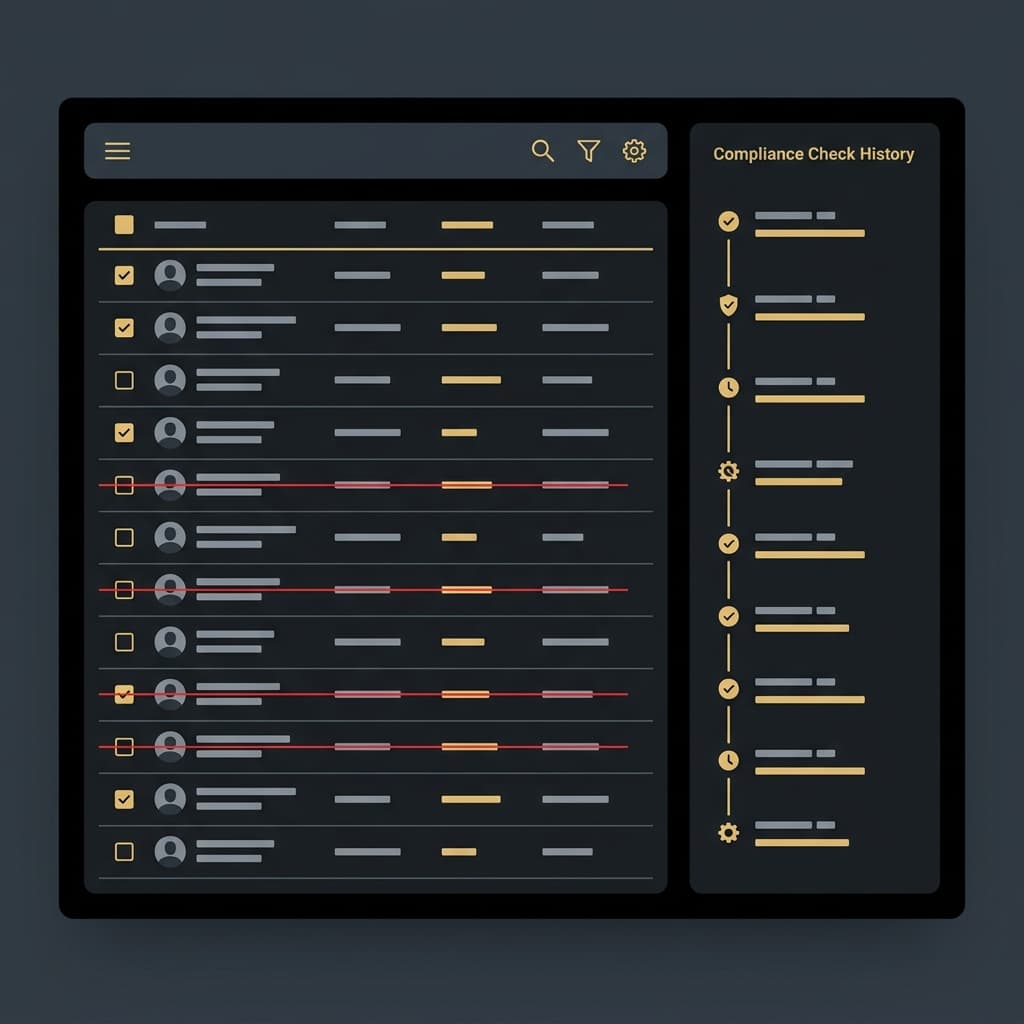
When OFAC asks why a transaction was approved, you need timestamped records showing what was checked, against which list, and who approved it.
Conclusion: Don't Wait for the Subpoena
The $275 million penalty levied against Adani Enterprises could have been much worse: the statutory maximum was over $384 million, reduced only because of proactive disclosures and extensive cooperation. But the best outcome isn't a reduced fine; it's avoiding the violation entirely.
Are your supply chain partners truly who they say they are? Or are you relying on the compliance equivalent of a paper logbook? The era of "we didn't know" is over.
Stop Guessing. Start Screening.
SecurePoint USA provides continuous, API-driven screening that exposes front companies, evaluates 50% Rule aggregation, and generates immutable audit trails. Don't let a vendor's hidden risk become your $275M liability.
Request a Trade Compliance Demo