
Source-backed comparison
SecurePoint USA vs Envoy
If your primary buying driver is audit-defensible screening, ITAR and CMMC compliance evidence, and structured adjudication, SecurePoint is the better fit. If you need a broad enterprise workplace platform (desk booking, room management, and a wide integration catalog alongside visitor management), Envoy is stronger today.
Based on SecurePoint product capabilities and publicly available materials reviewed on 2026-04-04.
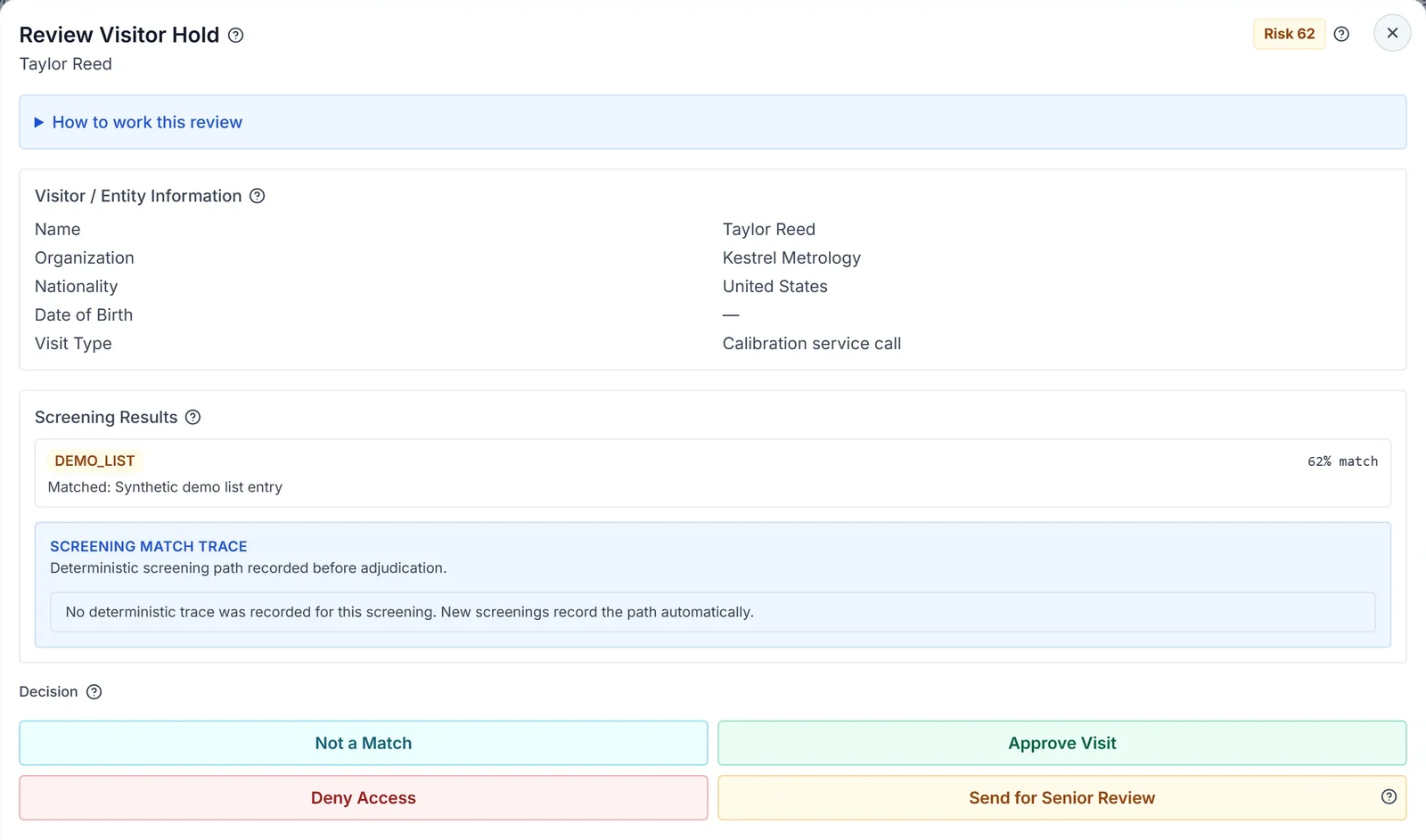
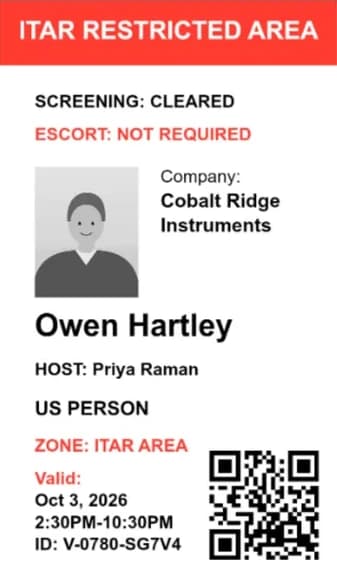
Pictured: a held possible match and a badge preview from a demo organization with fictional visitors.
Choose SecurePoint if
You need visitor management as part of a compliance program, not just a front-desk sign-in flow.
Screening, adjudication, and exportable compliance evidence all live in the same visitor workflow.
Your buyer is an FSO, compliance lead, export-control team, or CMMC assessor.
You want published defense pricing instead of a contact-sales starting point.
Choose Envoy if
You want a comprehensive enterprise workplace platform that covers visitor management alongside space and delivery operations.
You need a wide, publicly named integration catalog across identity, HRIS, and access-control systems.
Desk reservations, room booking, and delivery management are requirements alongside visitor check-in.
You are optimizing for workplace experience breadth before you optimize for export-control evidence depth.
Comparison
Where the approaches actually separate
This table only includes points we can support from SecurePoint's current product capabilities and publicly available materials.
Compliance-first screening at check-in
Screens visitors against OFAC SDN, BIS Entity List, UN, EU, and UK consolidated lists at check-in, with structured adjudication and reviewer audit trail.
Public materials describe watchlist and denied-party screening capabilities, typically positioned within a broader workplace compliance and notifications story.
Flagged-visitor adjudication workflow
Flagged visitors route to a structured review queue with documented reviewer actions, escalation paths, and a durable adjudication record exportable for audit.
Public pages focus on alert routing and approval flows; the depth of reviewer documentation and adjudication-record export for assessors is not spelled out in public materials.
After-visit proof and evidence export
After-visit reports and evidence packs tie screening outcome, reviewer action, badge output, and escort records into a single exportable bundle for audit and assessor review.
Markets visitor logs and analytics dashboards; a comparable bundled evidence-export path for regulated-facility audits is not described in current public materials.
ITAR, EAR, and CMMC workflow language
Product pages, whitepapers, and badge fields are explicitly named around ITAR, EAR, CMMC, DFARS escort enforcement, and compliance evidence.
Compliance pages address general regulatory and data-privacy requirements. ITAR-specific workflow language is referenced on the blog but not a primary product positioning theme.
Commercial model
Publishes defense visitor pricing with defined tiers and no per-screening-fee language.
Pricing is contact-sales for most tiers; public materials do not list a per-site starting price for compliance-focused visitor management.
Enterprise integrations
Supports Microsoft SSO, approved API access, and Slack and Teams screening alerts. Named PACS integrations are not yet publicly listed at the same breadth.
Publicly names a broad integration catalog including Okta, Azure AD, Google Workspace, Slack, Teams, Workday, BambooHR, and multiple access-control systems.
Neutral Read
Where Envoy is stronger today
A credible comparison acknowledges where the alternative has real advantages.
Broad enterprise integration catalog
Envoy publicly names integrations across identity (Okta, Azure AD, Google), HRIS (Workday, BambooHR), communication (Slack, Teams), and access-control systems. That is a wider publicly documented integration surface than SecurePoint today.
Workplace experience breadth
Envoy packages visitor management alongside desk reservations, room booking, and delivery management. Buyers looking for a single workplace-ops platform will find more out-of-the-box coverage.
Scale and brand recognition
Envoy markets thousands of locations and well-known technology customers. That scale and social-proof density is stronger than SecurePoint currently publishes.
Trust And Proof
What SecurePoint delivers today
The comparison above describes each product from its own public materials. This is ours, running. Anything claimed for SecurePoint on this page is something you can ask to see in a walkthrough.
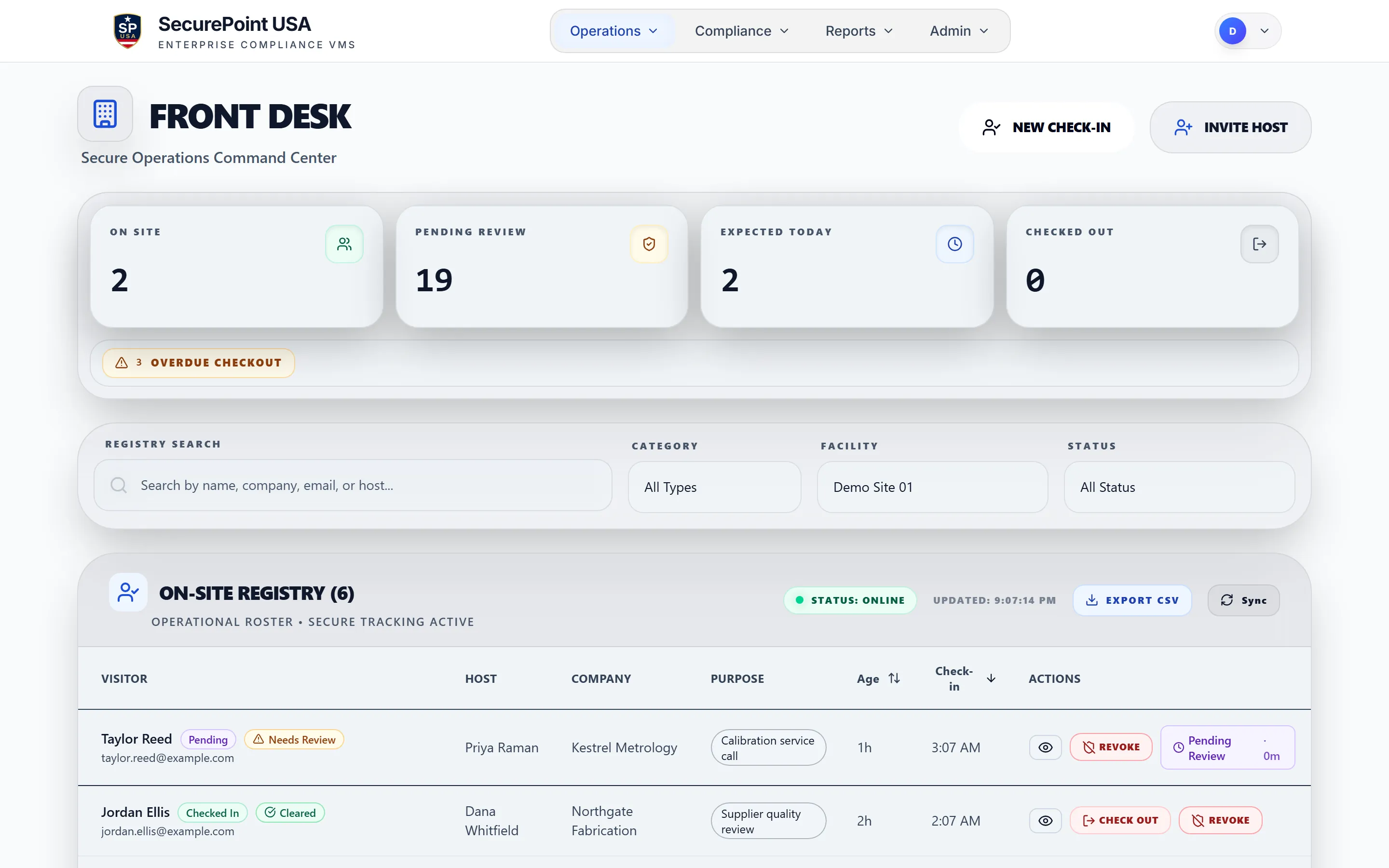
Swipe to pan the screen
Watch a possible match get reviewed
A possible match holds the visit until a reviewer compares the details and records the decision and the reason.
Read the transcript
Step 1. Open the case and read the summary line.
Step 2. Check the closest match. Here the date of birth is different.
Compare it with the visitor's ID, not only with what they typed at check-in.
Step 3. In the decision column, choose Not a Match. The text under it tells you what happens next. It clears the list match only. Host verification still applies.
Step 4. This match is strong, so the program asks why. Choose Date of birth does not match.
Step 5. Write the note. Say what you compared and what was different. Insert the comparison adds the details from the screen.
Write it for someone who reads it a year from now.
Step 6. Select Confirm Decision. Your name, your role and the time are saved with it.
The case leaves the queue. The host still confirms the visitor before a badge prints.
Published defense pricing
SecurePoint publishes visitor pricing for defense buyers instead of requiring an enterprise quote request to understand the starting point.
After-visit evidence path
After-visit reports and evidence exports are part of the visitor compliance story, not an afterthought bolted onto a generic sign-in flow.
ITAR and CMMC compliance depth
SecurePoint's whitepapers, product pages, and badge workflows are explicitly built around ITAR, EAR, CMMC, and DFARS compliance evidence.
Frequently asked questions
When is SecurePoint the better fit than Envoy?
SecurePoint is the stronger fit when visitor management is bought as part of a compliance program: screening at check-in, structured adjudication, ITAR and CMMC workflow language, after-visit evidence, and export-ready proof are all central to the product story. If those capabilities need to sit inside a regulated-facility audit package, SecurePoint is purpose-built for that outcome.
Where is Envoy stronger today?
Envoy is stronger in enterprise workplace breadth: named HRIS, identity, and access-control integrations; desk and room management alongside visitor; and broader published scale proof. Teams buying a single platform for all workplace operations will find more coverage in Envoy today.
Does Envoy replace a dedicated compliance visitor system?
Envoy offers compliance features, but its public positioning is workplace-experience-first. Buyers whose primary need is adjudication records, ITAR escort logs, and assessor-ready evidence bundles should evaluate whether Envoy's compliance depth matches what an ITAR or CMMC program actually requires.
How should buyers compare pricing?
Envoy's enterprise pricing is contact-sales. SecurePoint publishes visitor pricing for defense-oriented buyers with defined tiers. Buyers who want a clear starting number for budget planning will typically find SecurePoint faster to evaluate.
Keep Comparing
Other alternatives buyers evaluate
Every comparison uses the same neutral format and notes where the alternative is stronger.
SecurePoint vs iLobby
Sanctions-screened visitor access compared with iLobby VisitorOS and FacilityOS.
SecurePoint vs Sign In Solutions
For defense and regulated facilities weighing compliance depth against workplace breadth.
SecurePoint vs Proxyclick (Eptura Visitor)
US export-control screening, adjudication, and audit evidence versus broader enterprise worktech.
SecurePoint vs Veristream
Sanctions screening compared with Building Intelligence SV3 secure physical-facility access.
SecurePoint vs LobbyGuard
Sanctions screening versus background-check-oriented visitor management for schools and facilities.
SecurePoint vs FacilityOS
A dedicated compliance VMS compared with a broader facilities management suite.
See the adjudication and evidence workflow, not just the lobby screen
The fastest way to understand the difference is to walk through check-in, flagged review, badge output, and after-visit evidence in one demo.