Preserving the Arsenal of Liberty at 250: Why the Next Century of American Defense Lies in Small-Business Compliance
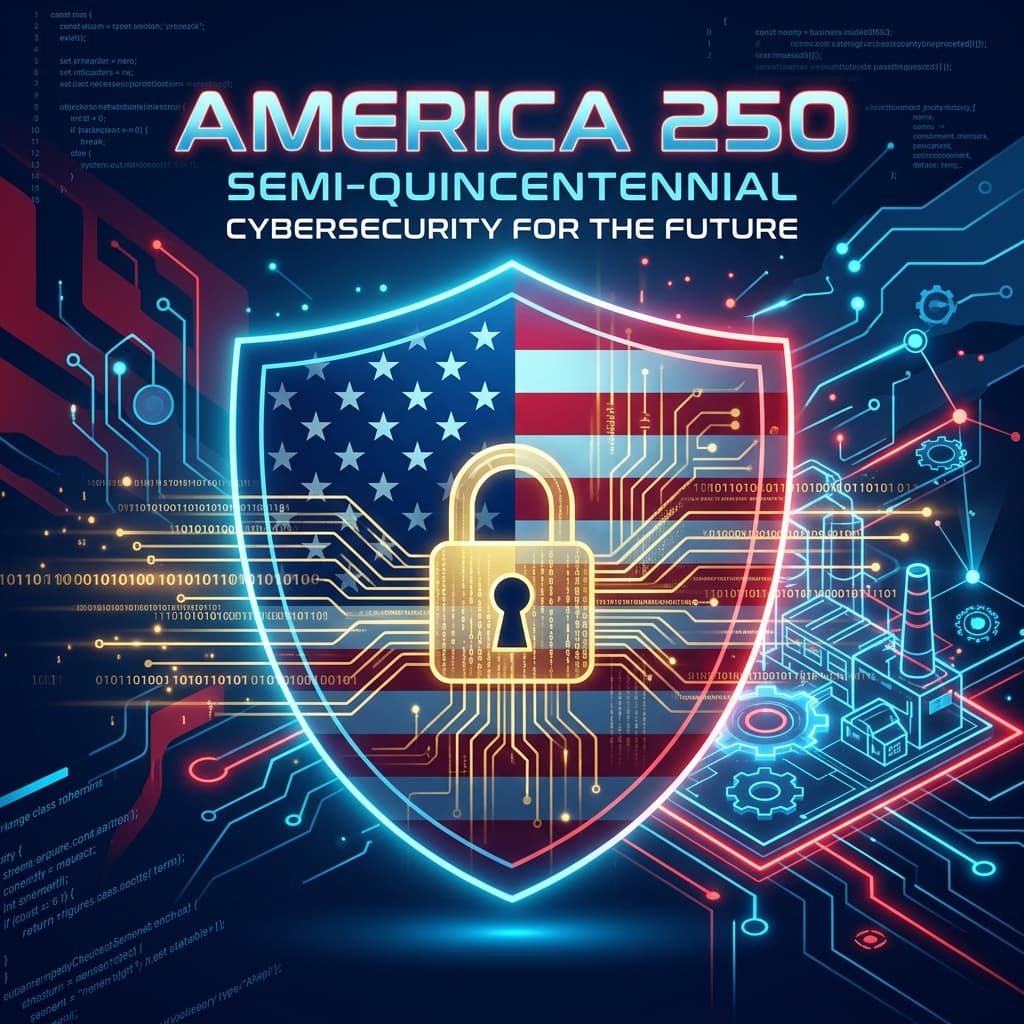
As the United States celebrates its 250th anniversary, the battle to protect American sovereignty has shifted from factory floors to digital and physical perimeters.
Two hundred and fifty years ago, a nation was forged on the belief that liberty requires security, and security requires self-reliance. As we look back on America's journey, the industrial engine that preserved this experiment (the "Arsenal of Liberty") has fundamentally transformed.
During the Second World War, the Arsenal of Liberty was defined by smoke stacks, assembly lines, and heavy manufacturing. Giant factories rolled tanks, built bombers, and forged steel. Physical security was simple: armed guards, perimeter fences, and paper sign-in logs.
Today, in 2026, the modern Arsenal of Liberty is silent, distributed, and digital. It is composed of thousands of small-to-midsize software developers, precision machine shops, engineering consultancies, and research laboratories. However, this decentralized innovation makes small subcontractors prime targets for sophisticated foreign adversaries looking to siphon U.S. defense designs and intellectual property.
The Modern Patriotic Duty
National security is no longer just the domain of soldiers and prime contractors. Every small business handling Controlled Unclassified Information (CUI) represents a critical node in our national defense. In 2026, regulatory compliance under CMMC and ITAR is not just bureaucratic red tape; it is the modern brick-and-mortar defense of American innovation.
The Modern Frontline: The Vulnerability of Small Defense Firms
Why are small subcontractors targeted? The answer lies in the asymmetric nature of modern cyber and physical espionage. While the Pentagon and tier-one prime contractors (like Lockheed Martin or Northrop Grumman) spend billions securing their networks, small machine shops and components suppliers often rely on legacy systems and paper-based facility controls.
Foreign intelligence agencies don't need to breach a military network directly if they can simply walk into a subcontractor’s lobby, look at a paper visitor log, scan a badge, or intercept data on a vulnerable server. By gathering fragmented details (CUI) across dozens of small suppliers, adversaries can reconstruct classified military blueprints.
The November 2026 CMMC Deadline: Compliance or Attrition
To combat this threat, the Department of Defense is implementing the Cybersecurity Maturity Model Certification (CMMC). Phase 2 of that rollout was scheduled to begin on November 10, 2026. That schedule has changed since this post was published, so read our Phase 2 update before planning around the date.
Phase 2 is the step that makes a third-party (C3PAO) Level 2 assessment a condition of award for most Department of Defense contracts involving CUI. That prospect has already created a "compliance crunch":
With over 80,000 contractors requiring audits and only a limited pool of certified third-party assessors, scheduling delays are leaving businesses exposed.
Analysts predict that between 15% and 20% of small contractors may exit the defense base due to the prohibitive cost and complexity of compliance.
This attrition represents a severe threat to American supply chain resilience. If small, innovative machine shops exit the defense sector, the U.S. loses capacity at a time when scaling defense production is of critical strategic importance.
The Overlooked Roadblock: CMMC Physical Security (PE) and ITAR
Many defense contractors focus entirely on firewalls and endpoint security, ignoring physical access controls. Yet, CMMC Level 2 physical protection requirements (PE.L2-3.10.1 through PE.L2-3.10.6) mandate that contractors:
- Limit physical access to organizational systems, equipment, and operating environments to authorized individuals.
- Escort visitors and monitor visitor activity.
- Maintain audit logs of physical access. For visitors, that typically covers name, date, time, purpose, and escort.
- Control physical access devices (keys, badges, biometric locks).
Furthermore, under ITAR (International Traffic in Arms Regulations), letting a foreign national view a controlled assembly line or blueprint constitutes an unauthorized "deemed export." Paper visitor logbooks, which are easily falsified, illegible, and lack real-time sanctions screening, are a major vulnerability that can derail an assessment.
| Requirement | Traditional Paper Logbook | SecurePoint USA Visitor Management |
|---|---|---|
| Identity Verification | Self-reported handwriting (easily forged) | Government ID and passport capture (barcode, MRZ, and OCR) |
| Sanctions Screening | None (or slow, retrospective checks) | OFAC SDN and BIS Entity List check at the lobby kiosk, before a badge prints |
| Escort Logs | Often blank, forgotten, or illegible | Digital escort assignment, host attestation, and exit checkout |
| Audit Defensibility | Low (susceptible to damage, theft, or editing) | Cryptographic SHA-256 hash chains (tamper-resistant) |
Supporting Small Business and the National Interest
SecurePoint USA is dedicated to ensuring that compliance does not break the backbone of the American defense industrial base. We believe that small contractors shouldn't have to choose between going out of business or failing audit checks.
By bringing physical security controls, automated sanctions screening, and visitor auditing into one easy-to-deploy, affordable SaaS platform, we help small businesses run their CMMC Level 2 and ITAR visitor controls in a single package. We help you control foreign-person access to controlled areas and compile tamper-evident evidence packs you can hand to a third-party assessor.
Preparing for a CMMC Level 2 assessment?
Request a walkthrough of our visitor security system for CMMC PE evidence.
Guarding the Next 250 Years of Liberty
As fireworks illuminate the skies for America's 250th anniversary, let us remember that the defense of our country relies on the integrity of our small businesses, innovators, and suppliers.
Securing the Arsenal of Liberty starts at the front gate. By moving past "compliance theater" and running rigorous physical access controls, contractors help keep American innovation safe and stay competitive for the next 250 years.
Frequently Asked Questions
What is the relation between America's 250th anniversary and CMMC?
During America's Semiquincentennial in 2026, the DIB faces a major regulatory shift as CMMC Level 2 requirements take hold, making cybersecurity and supply chain compliance critical to preserving national security.
Why are small defense contractors targeted by foreign adversaries?
Adversaries often target smaller subcontractors because they typically lack the advanced cyber and physical perimeters of prime contractors, providing easier routes to access sensitive military intellectual property.
What is the CMMC November 2026 Phase 2 deadline?
November 10, 2026, was the scheduled start of CMMC Phase 2, the phase that makes a third-party (C3PAO) Level 2 assessment a condition of award for most DoD contracts involving CUI. That schedule has since changed, so confirm the current status with your contracting officer before planning around the date.
How can small contractors comply with CMMC physical visitor requirements cost-effectively?
SecurePoint USA provides an affordable, compliance-first visitor management platform that automates identification, escort logging, sanctions screening, and audit reporting for smaller contractors.
CMMC Level 2 Visitor Control Playbook
- Step-by-step PE.L2 requirement mapping
- Escort logging & identity verification guidelines
- Audit evidence templates for C3PAO assessment
Or get it sent to your inbox