
March 2026 · 6-minute read
OFAC Designates Rwanda Officials:
The General License Wind Down Trap

OFAC's latest designations involving the Rwanda Defence Force highlight why screening alone is not enough. Learn how to handle General License wind down deadlines and audit-ready responses.
Screening Alone Is Not Enough
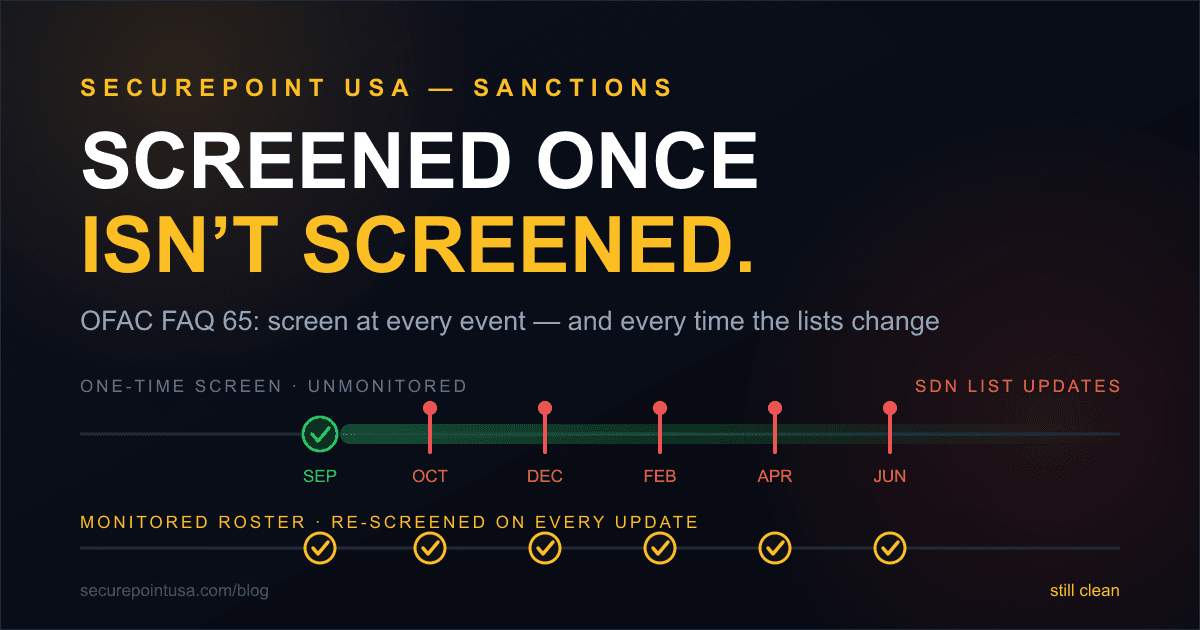
OFAC can designate a target and issue a General License the same day. For compliance teams, this means screening alone is not enough. You need an operational playbook.
When a sudden sanctions designation hits the wire, compliance officers, controllers, and CFOs often face a frantic scramble. The March 2, 2026, actions regarding the Democratic Republic of the Congo (DRC) and Rwandan officials are a perfect example of how quickly the landscape shifts. It is no longer acceptable to run a daily batch screening and assume you are safe.
True compliance requires immediate response capabilities, clear licensing workflows, strict deadline management, and unassailable audit trails.
What Happened on March 2
The Department of the Treasury's Office of Foreign Assets Control (OFAC) updated its Specially Designated Nationals (SDN) list to include key officials within the Rwanda Defence Force. Concurrently, OFAC issued DRC-related General License 1, which authorizes the "Wind Down of Transactions Involving the Rwanda Defence Force."
This action immediately restricted U.S. persons and organizations from engaging in standard business operations with designated parties. However, the General License (GL) provides a temporary authorization to wind down those activities without committing a violation.
Why GLs Change the Playbook
A General License does not mean "business as usual." It is a strictly bound, temporary exception to a strict liability law. When a GL is issued alongside a designation, it fundamentally shifts the compliance playbook from standard prevention to controlled remediation.
A GL comes with strict conditions and hard deadlines. Acting under a General License requires precise recordkeeping, because when the deadline expires, the authorization expires. Organizations must shift their focus from catching new hits to actively managing the offboarding of an existing, newly sanctioned relationship.
The Two Traps
Compliance teams navigating a new designation and an associated GL typically fall into one of two major regulatory traps.
The Deadline Trap
When OFAC issues a wind down license, the clock starts ticking immediately. The deadline trap occurs when an organization fails to align its internal operational speed with the OFAC timeline.
- If internal communication relies on messy email chains, delays will happen.
- Any transaction after the exact deadline is an unauthorized violation.
The Ownership Trap
Sanctions rarely stop at the named individual or entity. Under OFAC's 50 Percent Rule, any entity owned 50 percent or more in the aggregate by one or more blocked persons is also blocked.
- A newly sanctioned official might own a majority stake in a benign supplier.
- Failing to map ownership structures will result in indirect violations.
An Audit-Ready Response Playbook
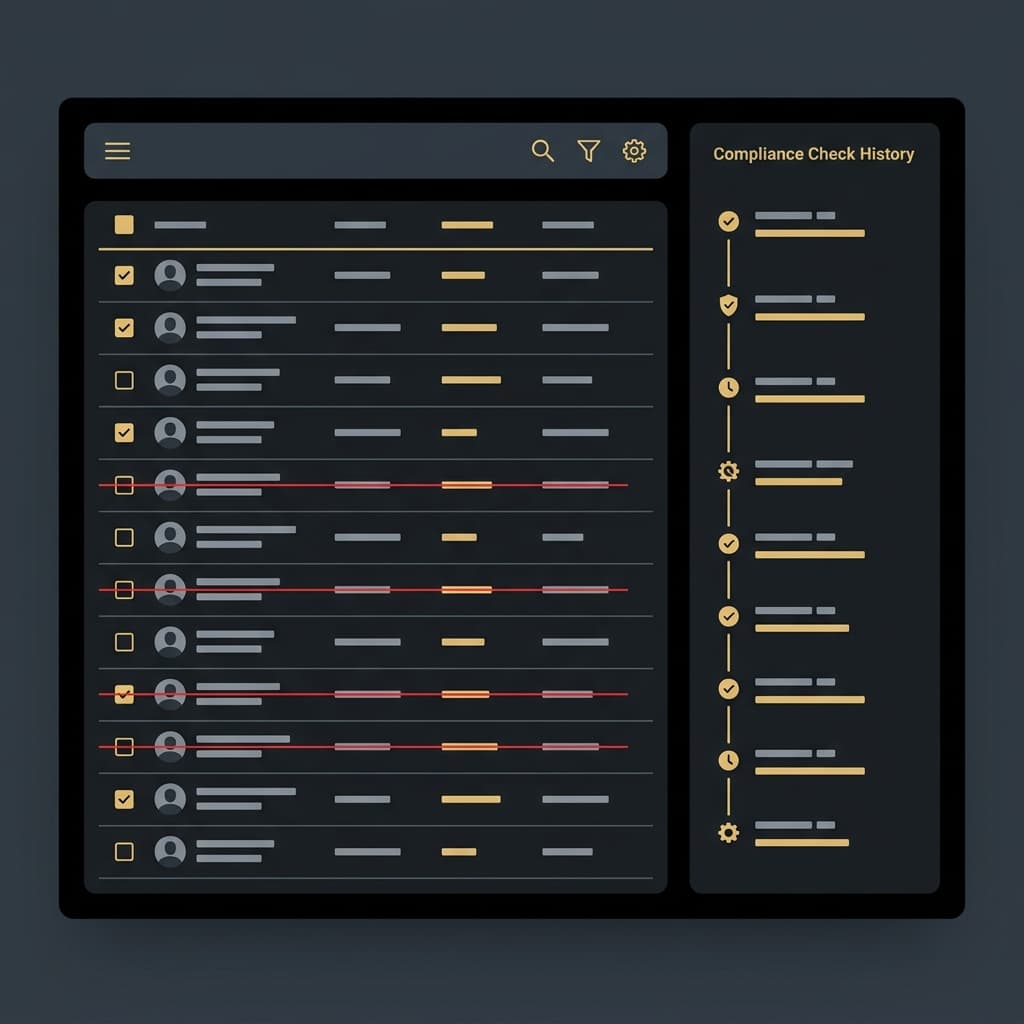
When a designation hits, you need a workflow that holds up under regulatory scrutiny. An audit-ready response is not a spreadsheet; it is a systematic, trackable process.
The moment a screening hit is confirmed, digitally quarantine the account. Halt all automated transactions immediately.
Apply the 50 Percent Rule to uncover indirect exposure across your entire database.
Determine if your specific transactions qualify for the GL wind down provisions.
Execute steps to terminate the relationship before the GL expires.
Document blocked property and submit required reports to OFAC within 10 days.
Record every step, decision, and system check in a tamper-proof audit log for future regulatory review.
What This Means for Schools
Educational institutions mistakenly believe they are insulated from international sanctions. The reality is far different. Schools receive tuition from international accounts, accept donations, and host foreign visitors. If a newly designated official is paying tuition, the school is directly exposed. Institutions must be prepared to screen every payer and donor. Refer to our OFAC Licensing Guide for Schools.